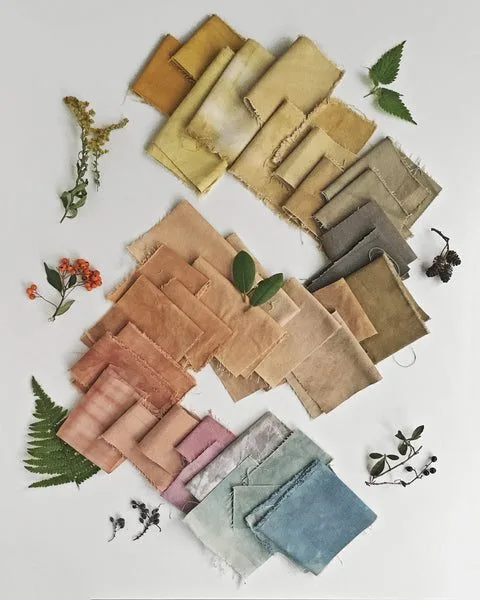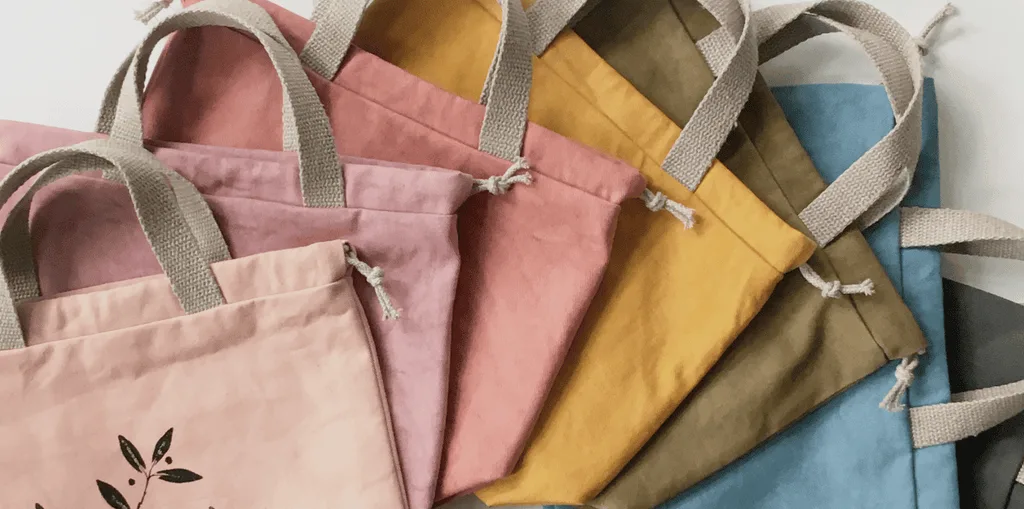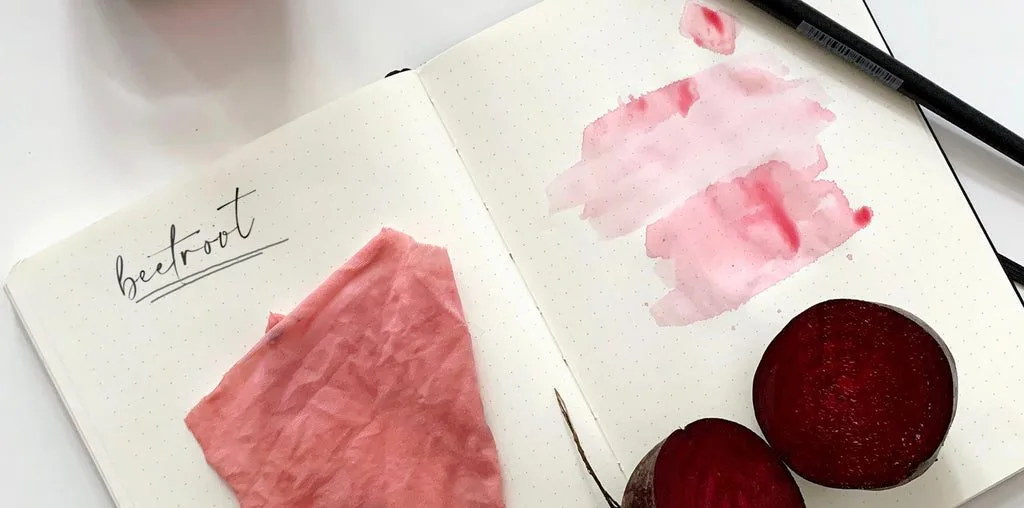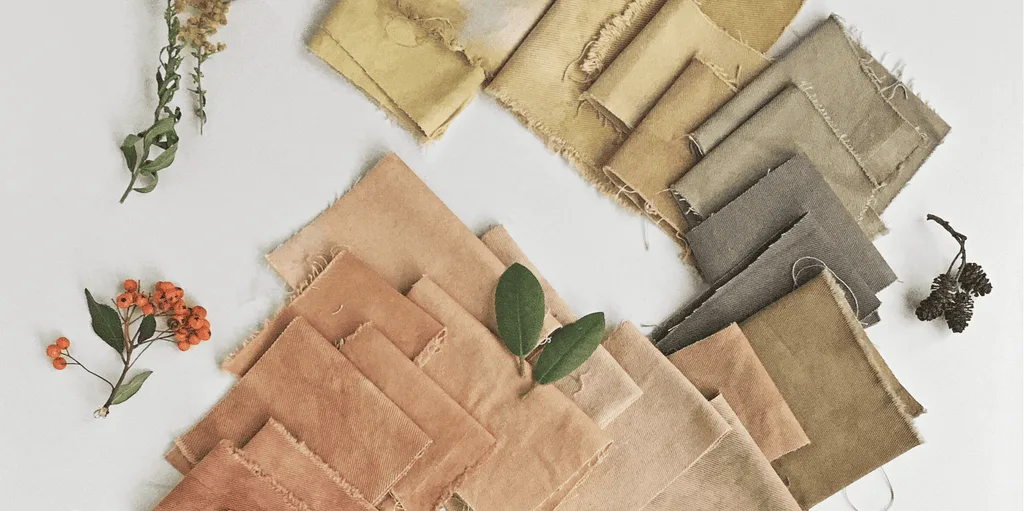
Have you ever tried extracting colors from plants? There are hundreds of plants bearing beautiful dyes, growing all around us. Some plants are traditionally recognized as basic dye sources, but if you open your eyes and look around, you will find an abundance of color in front of your door. I made a list of plants local to me, but I strongly encourage you to try plants that grow where you live. And living in a city is no excuse — I live in a big city myself, and even in Berlin, Germany, I've found enough plants to make a full spectrum of color.
My reversed approach
I started my adventure with plant dyeing somewhat counterintuitively, with practice rather than theory. Instead of diving into books and resources, I began with experimenting. Walking my sweet dog in a local park every morning, I had a lot of time to collect plants. The possibilities are truly endless: young leaves and first flowers popping in spring, weeds and trees giving their full potential throughout the summer, colorful berries decorating the bushes in autumn, and broken branches, fallen acorns, and cones to be found before the first snow. No matter the season, nature always has something in stock for us.
Extracting the dye
When we would come back home, I would slowly start extracting the colors and testing the dyes on fabric. I tried to test a different plant every other day. Some of them were elusive and got spoilt when too much heat was applied for too long; some needed days and multiple heating sessions to start showing their true potential. Trial and error are the best teachers here. This post isn't a how-to about achieving specific colors anyway — it's an inspiration for your quest of finding dyes local to you and getting in touch with your surroundings.
How to store your plants
There is no one-solution-fits-all, and you will need to experiment a bit. I can give you a few general tips. Most plants keep their dye potential when dried. Put them on your windowsill or hang them up, and after they dry, store them in paper bags or boxes. This way, the plant material will be able to breathe and won't develop mold. There are plants, though, that work best when used fresh, like goldenrod. Dried goldenrod produces a much paler color. My solution is to put it in the freezer. I used some frozen goldenrod 10 months later, and it dyed beautifully. Another good dye plant to freeze is ligustrum berries, but the reason here is more interesting: ligustrum berries seem to give a better color after the first frost, so either collect and use after the first cold days or just put them in your freezer before using. Be careful — these berries are toxic, and the fumes shouldn't be inhaled.
Collect with respect
When collecting dye material, please do so with respect. Take only as much as you need, and leave enough for the plants to survive and the animals to feed. In winter, birds eat berries, so don't take away the food they really need. When picking leaves, collect from many different bushes or trees, so as not to stress the plant. In essence, please be respectful.
What about colorfastness?
Before we dive right in, here's a disclaimer: some of these dyes are not very lightfast (fugitive dyes) and will fade no matter how you fix them. Mordants don't help in this case. I still add these plants to the list, as they can be useful for hobby dyers who want to redye colors every season or for people working on craft projects with kids. Another important note: please make sure you know what you're collecting, and avoid using big quantities of plants that are toxic.
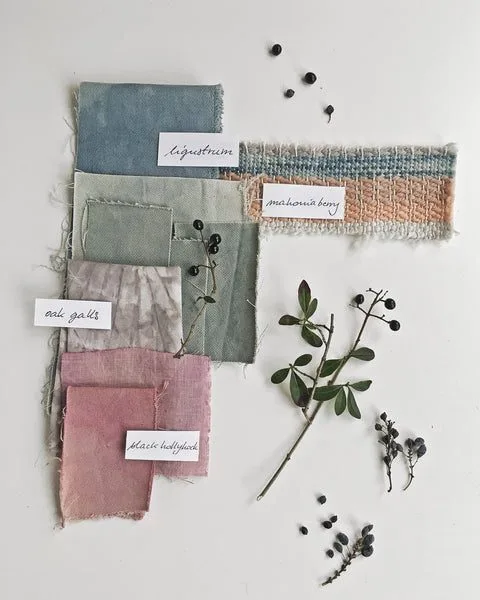
Local dye plants growing wild
Yellow
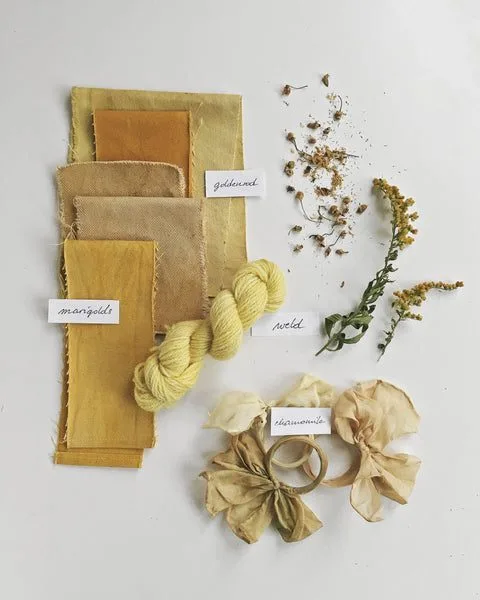
- chamomile — pale yellow
- birch leaves — pale yellow
- goldenrod — sunny yellow
- purple buddleja — sunny yellow
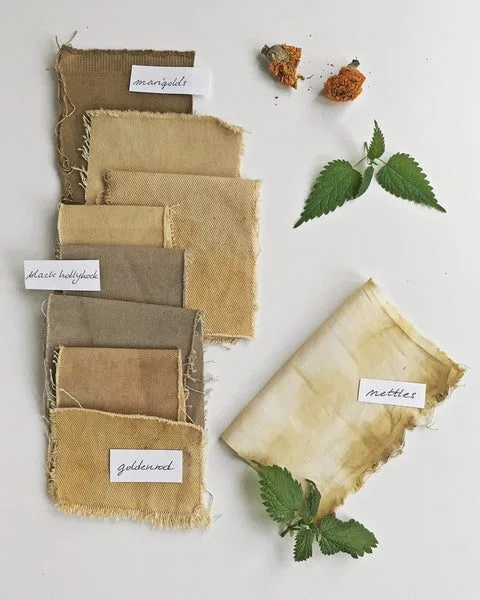
- marigolds — sunny yellow
Green
- marigolds — olive green with iron
- birch leaves — olive green with iron
- nettles — pale green, pale gray with iron
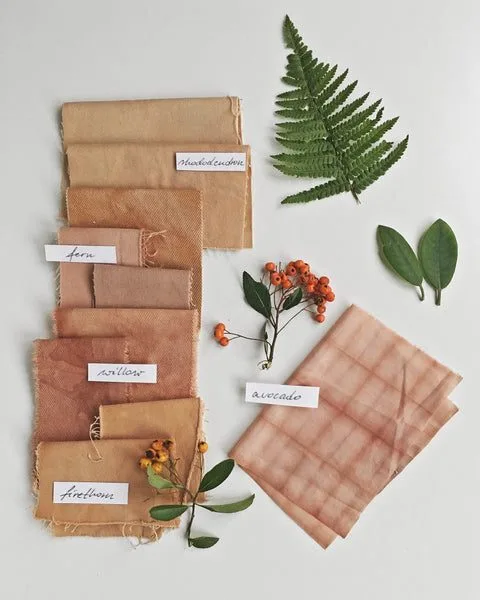
- ferns — light green to red-pink
Orange and pink
- rhododendron leaves — pale orange (toxic)
- willow leaves — orange-red
- firethorn berries — orange-red
- bracken fern
- hibiscus flowers — orange-red to light blue-green
Purple and blue
- mahonia berries — purple
- elderberries — pale purple
- oak galls — gray-purple with iron
- ligustrum berries — blue (toxic)
- black hollyhock — blue to gray
Brown and gray
- oak leaves — beige, gray with iron
- acorns — brown-beige, gray with iron
- alder cones — brown-beige, gray with iron
- walnut leaves — deep brown
- walnut skins — deep brown
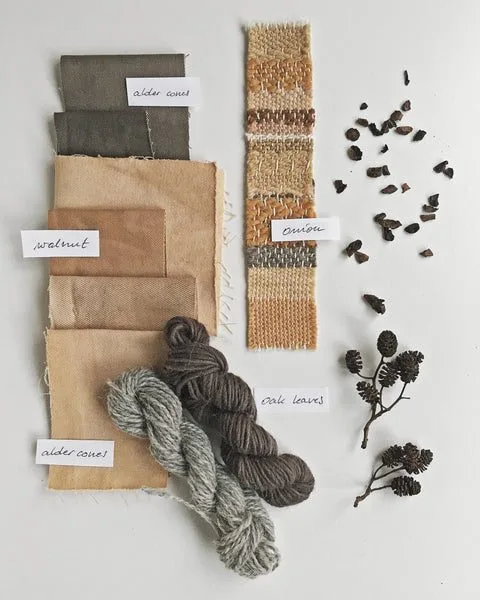
Find some more dyestuff in your kitchen
Kitchen waste
- turmeric — yellow
- pomegranate skins — yellow
- onion skins — orange
- avocado skins and pits — pink
- black tea, coffee — beige-brown
- rosemary — gray
- sage — pale green
- red cabbage — purple
- black beans — gray-blue
Start growing your own dye plants
Traditional local dye plants
- woad — blue
- madder root — red
- weld — yellow