Time to address something serious… beetroots.
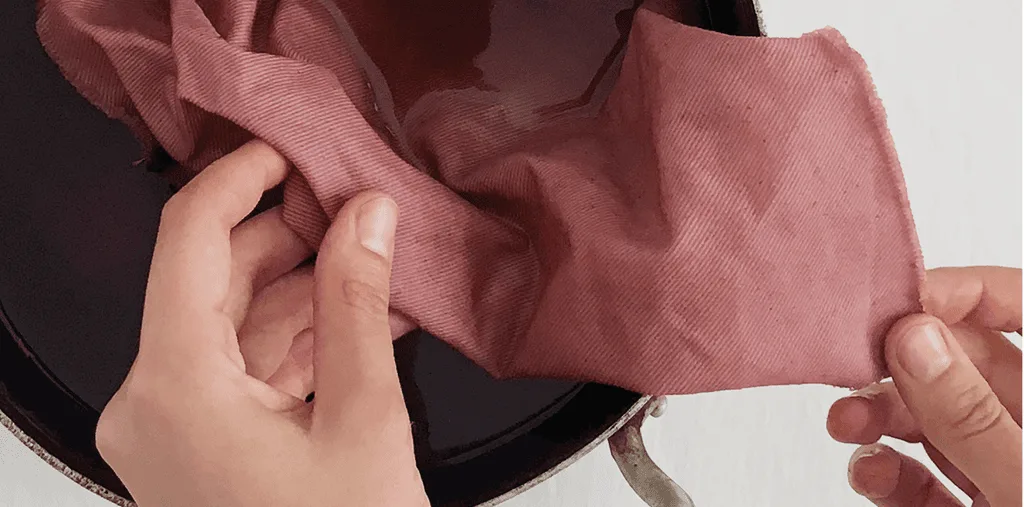
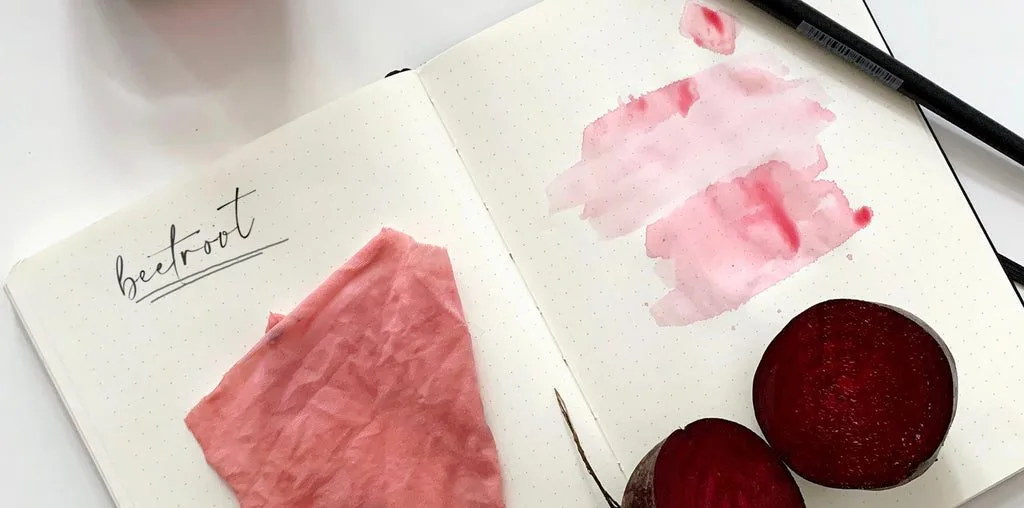
They color your fingers, they stain everything in your kitchen. It seems only natural to use them for dyeing fabric and yarn, right? We've all seen videos and tutorials showing beautiful colors achieved with beetroot. I even used beetroot for my first-ever dyeing project. And I got breathtaking pink that lasted… one day.
Fugitive dyes
I know it's tempting to use what you have on hand and what shows you strong color in seconds. Beetroot, red cabbage, black beans, blueberries… and there's nothing wrong with using them for fun when the stakes are low. But if you're thinking about dyeing fibers that should keep their color for any length of time, let me give you some alternatives that produce similar shades and don't fade after the first wash.
Here's my nugget of wisdom for you today — "foodstuff is not dyestuff". Yes, beetroots and blueberries stain, and they stain well. But as soon as you wash them, they turn some shade of beige, and even hidden from sunlight the color deteriorates quickly. If you can digest it, don't dye with it. You're far better off eating it.
Fixing dyes with mordants
Can't wait to dye lovely shades of pink, purple, or blue, though? There are reliable dyestuffs I recommend you try. But before we dive deep into natural colors, there's something else you need to do.
The first thing on the agenda is always mordanting your fibers before you dye them. A mordant is a natural pre-fixative that first binds with fibers, and in the next step, the dye binds with the mordant. A mordant is a link between the fiber and the dye, and therefore it has to be applied before you dye. This is a crucial step that allows the dye particles and fibers to connect. Mordanted fibers can be washed and are more colorfast. The mordant also influences the color — aluminum mordant makes colors more vibrant, and iron mordant makes them darker and more muted.
I know what you're thinking: "Let me use some mordant pre-fixative and I'm good to go with my beetroot pink." I'm so sorry, but no. Mordant won't help with making beetroot pink last; this color in itself is not stable. You can trust me.
So before you start dyeing, mordant your (washed) fibers. For mordanting, I highly recommend aluminum formate, but other aluminum compounds work too. Stick to the safety rules, please.
Alternatives to beetroot and co.
And now, here comes a list of beautiful and lightfast colors that can be used instead of food.
- Madder root — a staple in the natural dyer's kitchen. Madder is one of the oldest dyes known to humans, used thousands of years ago (we know this because archeologists found ancient madder-dyed wool which is still red). It makes beautiful reds when used in bigger amounts, and soft pinks when used in low concentration. When extracting, remember not to go much over 70°C, otherwise your madder dye bath might turn brownish. Add a teaspoon of baking soda to push the color more toward pink.
- Brazilwood — for high-impact purple pinks. If you're going for a wow effect, brazilwood is your friend. If you're going for baby pink, use brazilwood in low concentration.
- Cochineal — an insect that makes a range of vibrant colors, from orange to pink to red. It is pH sensitive, so you can influence the outcome by adding some vinegar for low pH (red-orange) or some baking soda for high pH (burgundy-pink).
- Avocado — one of the few kitchen finds that I wholeheartedly endorse. Avocado produces a very soft, moody pink if extracted with care. The dye compound in it is a colored tannin, and tannins are known to have good lightfastness. Avocado pink will often shift to orange-beige over the course of a few years, so keep that in mind.
- Logwood — when used on aluminum-mordanted fibers, it produces a strong dark purple. With a tiny pinch of iron, you can push it to purple-blue-gray tones.
- Indigo — the only true blue in the natural dyeing world. There are many indigo-pigment-bearing plants. Indigo usually refers to Indigofera tinctoria, but you can also use a European equivalent called woad. Indigo requires a different process, as the chemistry behind this special pigment is completely different. When dyeing with indigo, you won't use a mordant; you'd have to make a dye vat to dye fibers this beautiful blue.
And something extra: black hollyhock — not a very stable color, though a lovely source of soft blue. I wouldn't recommend it for pieces that need to last years. If you need it for a temporary project, black hollyhock can serve as a source of some truly beautiful colors, like blue, pink, purple, or even soft dark green.
Fibers dyed with the dyestuffs listed above can be washed and withstand the test of time. All naturally dyed pieces have to be cared for, of course. Use a natural washing soap (wool soap) and wash your fibers by hand in lukewarm water. Last but not least, don't leave the pieces exposed to direct sunlight.
And beetroots… well, Bon Appetit.