Dyeing with plants is a relaxing and slow craft, but at the same time, it is more complicated than most people think. When I started my dyeing journey, the amount of information I found online was overwhelming. And a lot of it contradicted each other. As a professional dyer who now researches plant dyeing intensively, I want to help you navigate these waters.
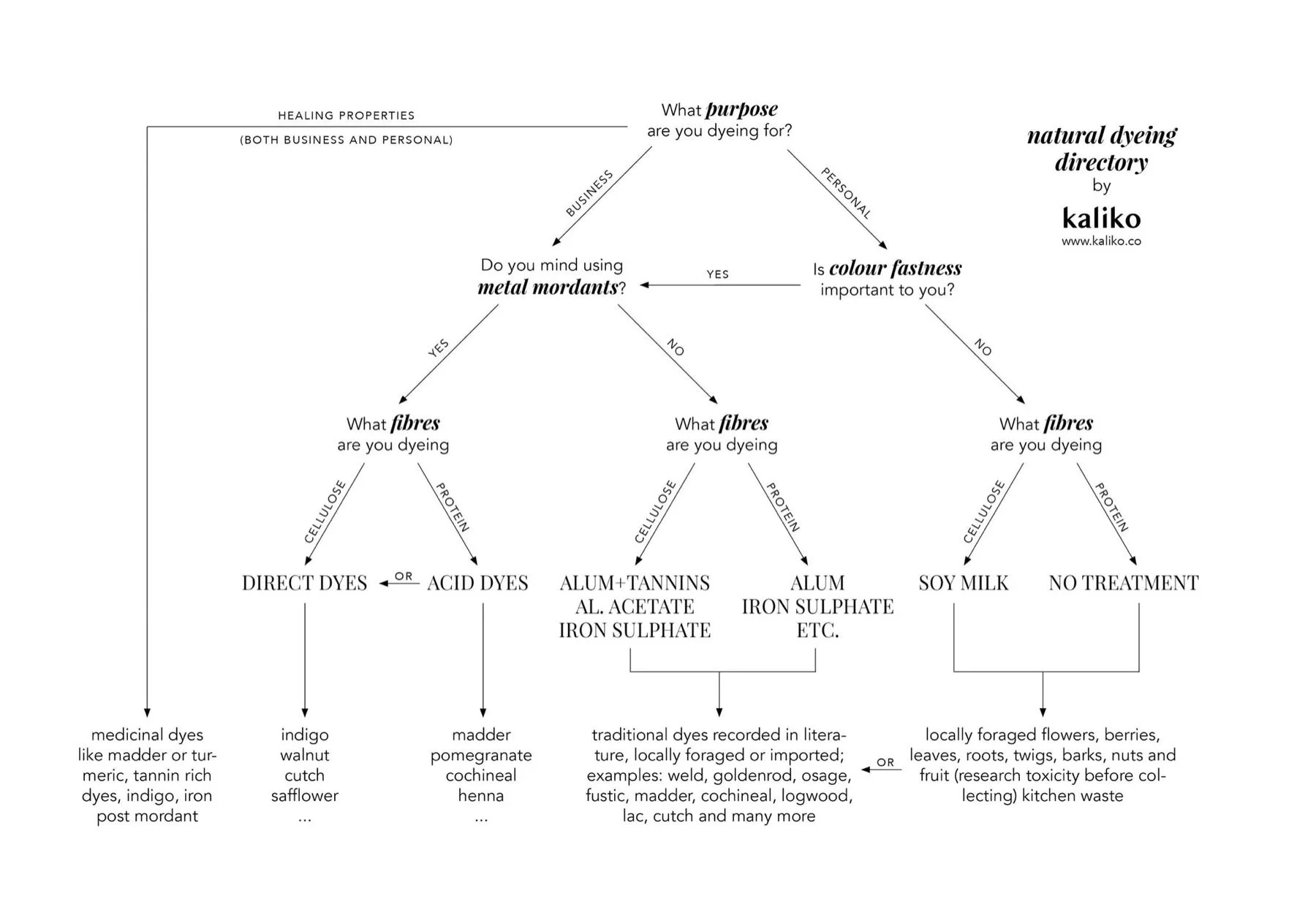
This post is just an overview. I created a flowchart to help you avoid the most common beginners' mistakes. This directory only covers which technique and which plants to choose. It does not cover the full process of dyeing. Before dyeing, always scour (wash) your fibers.
T1 — Direct dyes
Direct dyes don't require any mordants to attach to the fiber. There's only a handful of dyestuffs that work without any assist. Indigo is the best example for cellulose fibers (cotton, linen, hemp), while walnut, cutch, and safflower work on protein fibers (wool, silk).
T2 — Acid dyes
Acid dyes are dyes applied at lower pH and work on protein fibers, as they take advantage of protein's affinity for acids. You can use white vinegar or citric acid to lower the pH of your dye bath. Plants that work well as acid dyes include madder, pomegranate skins, henna, and cochineal. Results are lightfast but cannot be washed hot.
T3 — Metal mordants for cellulose
Metal mordants form a chemical bond between the fiber and the dyestuff, so that the colors stay fixed and don't detach when rubbed, washed, or exposed to sun. For cellulose fibers, common recipes include alum + tannins and aluminum acetate. Aluminum brightens colors; iron darkens them.
T4 — Metal mordants for protein
For protein fibers, metal mordants work with dedicated recipes. Alum mordant is the most commonly used (one step). Iron sulfate must be used sparingly to avoid fiber damage.
A lot of dyestuffs shared on social media and blogs are not suitable — like red cabbage, beetroot, or berries — and fade quickly. I recommend sticking to well-researched, traditional dyes: weld, goldenrod, osage, fustic, madder, cochineal, logwood, lac, cutch, and many many more.
T5 — Soy milk
Soy milk is not a mordant but a binder. It makes cellulose fibers act more like protein fibers and enhances the color uptake. It does not form any chemical bond. I use this method for my personal projects, hand-washing in lukewarm water with ecological soap.
T6 — Skip pretreating
Suitable for protein fibers when color fastness is unimportant. Wool and silk absorb dyes reasonably well without mordants or binders.
T7 — Medicinal plants
Dyeing with medicinal plants is a technique used in ayurvedic practice — you infuse the cloth with healing substances extracted from plants. Here the color is secondary to healing properties. Plants used include madder, turmeric, and indigo.
If you decide to dye with metal mordants, please make sure you are using gloves, clothing protecting your skin, and a face mask.