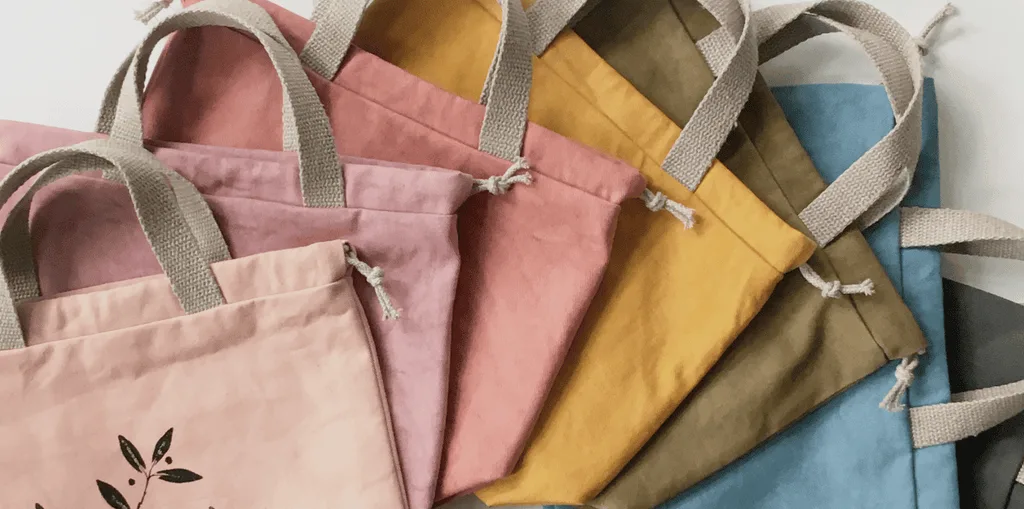
Since I started offering plant dyeing services, I get a lot of inquiries from small sustainable brands who want to add a line of plant-dyed products to their collections. I enjoy sharing my expertise and assisting other entrepreneurs on their journey to a more sustainable business. So I realized it would be of service to share some thoughts about plant dyes in sustainable fashion for a wider range of people to make use of them.
I divided the post into the most common questions and answers — all I have learned so far, based on my own experience as a small brand.
Is that the right approach?
Plant dyeing is experiencing a boom, as is sustainable fashion. Plant dyeing might seem like an eco-friendly solution and, of course, a great marketing boost too. I get all kinds of inquiries, from dyeing a single garment to dyeing hundreds of yards of fabric or hundreds of pieces of clothing. Here is my perspective.
I am an artisan working in a dye kitchen, hence I can only offer small quantities. It's all done by hand in 30L dye pots. What any artisan dyer would tell you: dyeing huge lengths of fabric is not possible in this setting and would probably take months. It's also a fairly water-consuming process when done without proper machinery, therefore not the most sustainable choice. If you are thinking about dyeing substantial lengths of fabric, my tip would be to find a professional dyery offering this service. This is quite a task, though, at least in Europe as far as I know.
An alternative you might want to consider, if you want to ditch unhealthy dyes, is switching to low-impact synthetic processes. In short: collecting plants in the wild isn't sustainable for big batches. Farming dye plants has ecological impact, of course, as well as water usage. This might be even higher than that of a certified low-impact dyery. In the case of synthetic colors, the dye is washfast and lightfast and can also be safely spot-cleaned, so it is less likely to get tossed. If your goal is to offer products made with respect for people and the planet, then you have to dig a little deeper.
Consider art collaborations and limited editions
Where I believe you can successfully incorporate plant dyes is in limited editions. If you are a fashion brand, think about a line of products that can be developed together with the artisan dyer to promote sustainability in your business. You can raise awareness of your clients and offer unique pieces in small quantities, in the form of a short-term artist collaboration. Because the dyeing is very time-consuming and done by hand, it is not cheap. Limited edition helps justify a higher price point.
Every dyer has a different studio setup and can process different amounts of clothes or fabric. It changes seasonally too — I can dye more in summer, as the pieces dry quicker and I can air-dry them outside. Winters are for smaller projects.
What kinds of fabrics can be plant-dyed
Once we are on the same page and you have decided if plant dyes are for you, a few words about what kind of fabric you can dye.
Natural dyes only work on natural fibers, like wool, silk, cotton, linen, etc. Polyester and other synthetic fibers have a different chemical structure and don't bond with plant dyes well. If you are thinking about dyeing a blend with a high percentage of natural fibers, tests will be needed to determine how the dyes absorb.
All fabrics need to be thoroughly washed, usually at 90°C, before dyeing, as well as pre-treated with metal salts (mordants). Think about it before you sew the pieces. Wash or cook the fabric first, otherwise the clothing might distort, or choose RTD (ready-to-dye) fabrics for your project. I always wash the fabric before I sew anything. Usually I dye it beforehand too, but this is not critical. I like to do it before, though, in case anything goes wrong. It saves me work and nerves.
What plants to use for dyeing clothes
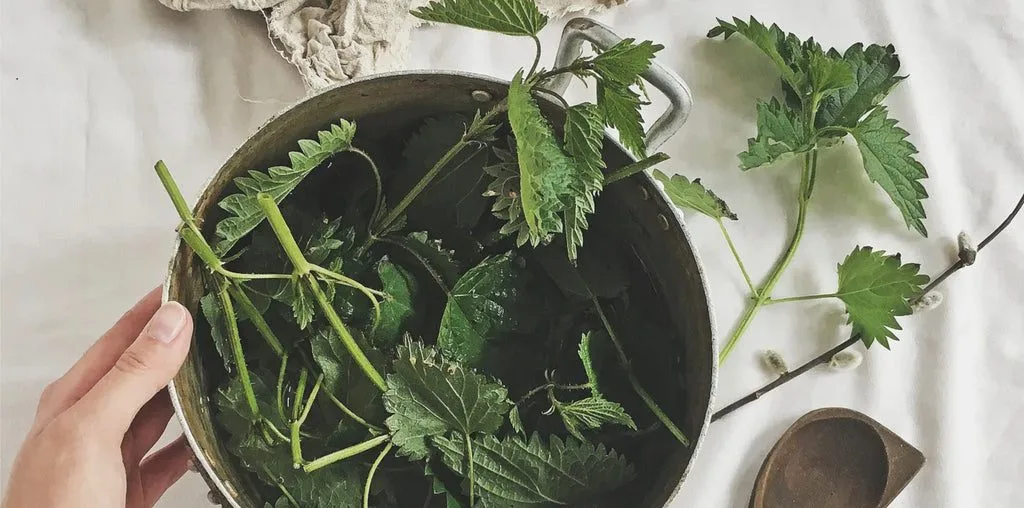
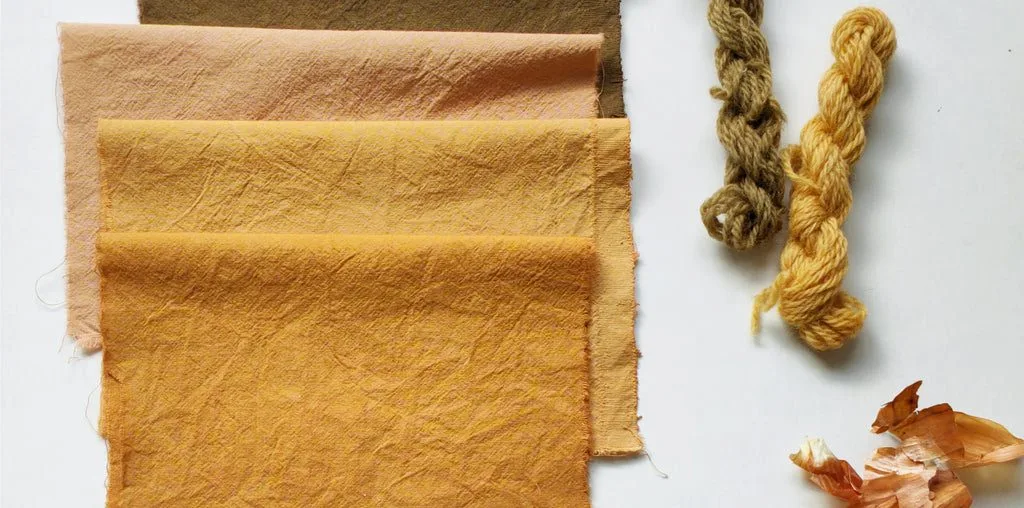
This is a common question, together with the idea of sticking to local food waste as a dyestuff. Most kitchen waste, unfortunately, doesn't stay colorfast. For clothing, I usually suggest traditional local dye plants like madder root or weld. Onion skins might fade after a few years, coffee usually only stains the fabric, and fruit pulp won't dye at all. Another common idea is using leftover flowers from local florists. If you want to offer high-quality durable clothing, I would advise against that, as most of the flowers are not lightfast.
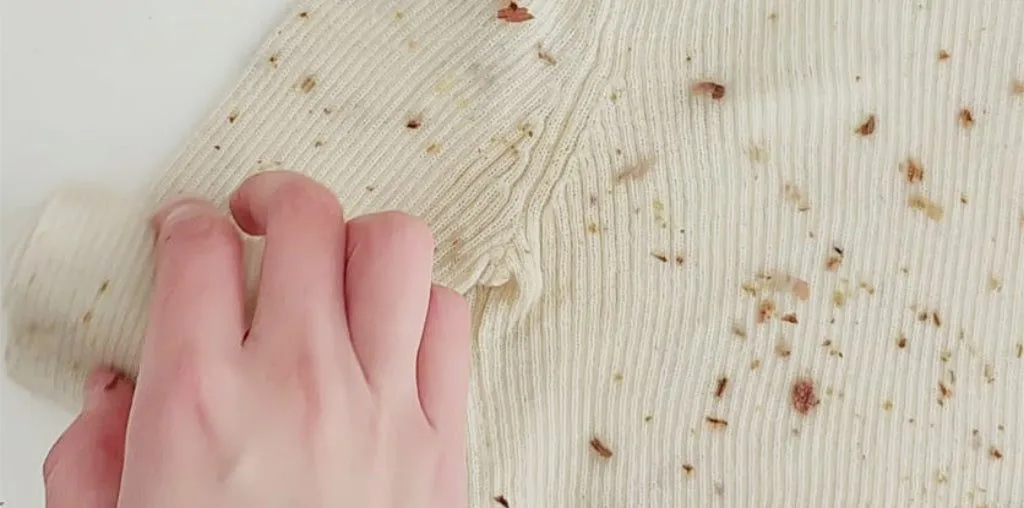
If you are thinking about using local resources for lightfast colors, I would suggest wood shavings from local sawmills. Otherwise, I highly recommend choosing traditionally farmed dye plants for the best colorfastness, as well as locally collected dyes for small projects. This is not viable for bigger batches. I don't grow my own plants, but I collect a lot of them locally, on the sides of roads, in parks, on abandoned lots, always taking small amounts to not disturb the environment.
That being said, these are my general tips for fashion brands. If you are dyeing for yourself, I would be much less strict. And if you are a business but your idea is to offer an elusive experience of clothing that changes over time, let me know and we will talk details. There is no right or wrong, there is just informed.
How to make your plant-dyed clothes lightfast
One thing to remember is that all fabrics, in order to be colorfast, need to be treated with metal salts like iron and aluminum. You should take it into account when deciding if this approach matches with your sustainability vision. Mordants bond with the fiber, and dyes bond with the mordant. They make the colors last so they can be exposed to sunlight and washed. And even though there are a few ways to skip the mordants (mostly by using tannin-rich dyes producing gray and beige), they are a MUST for lightfast vibrant colors.
Whatever you do, though, plant dyes are not pH-stain resistant. Very acidic or very alkaline liquids will stain or discolor plant dyes. Keep in mind that sweat stains might become visible over time. The key is to neutralize the stains quickly, to go back to neutral pH. As most stains are acidic, a baking soda solution applied to the stain will minimize the damage.
It is best to wash plant-dyed pieces by hand, in lukewarm water, using a neutral-pH detergent (like wool soap). Dry in shade. I don't advise spot cleaning, as vigorous rubbing might discolor the dye.
Last thing to mention — mordants won't make unstable dyes last. For the best result, you have to combine lightfast dyes with mordants. For pieces that will be exposed to sunlight a lot, you should choose traditionally lightfast dyes. For low-exposure pieces (like a cocktail purse) you are a bit freer.
Designing the colorways
Natural dyes are somewhat transparent. If you want to overdye an old garment, for example a yellow piece, you will achieve red with a yellow or orange undertone.
It is difficult to achieve a certain color. I usually start with the direction and test my way through the fabric samples, mordants, and dyes. Each fabric takes up dyes differently, and what is pink on one fabric might be orange on another. Yellow is the most common dye in the natural world; there are different shades of reds and pinks too. Greens are usually made by modifying yellow to olive green; the same two-step process applies to grays. Blue calls for an entirely different dyeing — indigo or woad vat. Deep greens and blacks are the most challenging to achieve, as they require over-dyeing and are therefore difficult and expensive to produce.
I like to let plant dyes surprise me, but if you are not that person, extensive testing has to be planned into your process.
Choosing the right process
Another important thing to mention: plant dyeing is never entirely even, and there are always some variegations happening. This is true at least for small dyepots. It is possible to reduce them with constant stirring for a few hours, but almost impossible to completely avoid. Some people like it, some people don't.
Shibori is a way to make this uneven effect look intentional. There are many beautiful tie-dye techniques you can incorporate in your designs.
If you are thinking about covering stains, bundle dyeing is the best solution. The results are unique every time, and even if some of the dyes fade over time, others stay strong, so the garment doesn't look faded. And if your clients stain it while wearing, it won't mean the piece is spoiled. Most stains are not visible on a colorful bundle-dye.
This is why bundle dye is also a great technique for kids' clothing. I probably wouldn't use aluminum mordants for kids unless you can really make sure the fabric is rinsed very thoroughly. Plus, kids' clothes don't have to stay colorfast for dozens of years anyway (kids grow fast). Mordanting won't make them pH-proof anyway, so stains will still happen, as it is with kids. I would personally go for bundle dyeing with soy milk or iron, to make it practical while beautiful.
Plan enough time to get it right
A project always starts with testing. If you have no fabric samples to test beforehand, it is really hard to tell how the color turns out. Different fabrics yield different results, and what dyes pink on one fabric might turn coral red or even orange on another. So unless you are fine with getting a different color than what you hoped for, it's probably not the way to go.
Keep some fabric samples at hand in a size that will let you properly assess the result (at least 15x15cm each, the more the better). Mordanting, testing, and evaluating takes time. There is a lot of back and forth, so make sure your deadline is not just a month away. This is not enough time to proceed with a project.
It is still possible that the end result will be slightly different from the tests. You have to prepare for small surprises, as plants are grown on different soils, water quality differs, the moon is in a different phase. This is an organic process. But it's the plants doing most of the work.
A long answer to a short question
As you can see, there is a lot to consider, and I hope you have a better understanding of how to prepare yourself for this process now. I am happy to answer your further questions.